Institute of Science Tokyo, Japan
- Laboratory of Adaptive Functional Systems @ Institute of Science Tokyo
- Autonomous Matter & Machines Lab @ AMOLF & TU/e (May 2026 – Jan 2027, planned)
My research focuses on realizing autonomy and functionality in soft physical machines by leveraging mechanical and fluidic nonlinearities as well as material properties. I believe that autonomous machines exploiting emergent phenomena arising from physical interactions within their structures and with the surrounding environment can open new possibilities beyond what conventional robots—based on centralized control—can achieve. I am also interested in implementing the remarkable functions and capabilities observed in living organisms by exploring the underlying structural principles that govern biological systems.
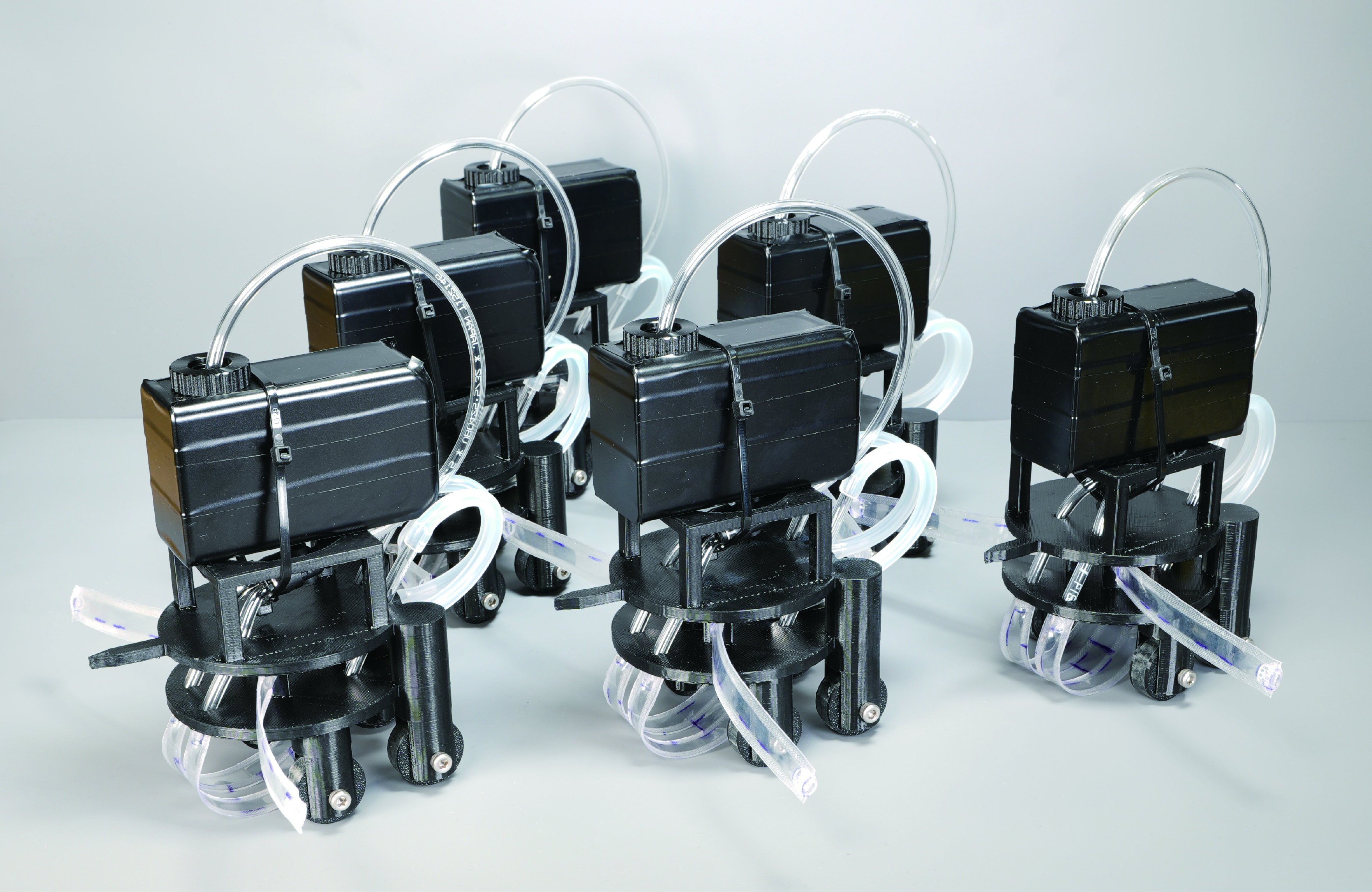
By harnessing the fluid-structure interaction phenomena of soft fluidic self-oscillating actuators, autonomous behaviors can emerge in electronics-free robots—and their swarms—without relying on electronic hardware or software-based control.
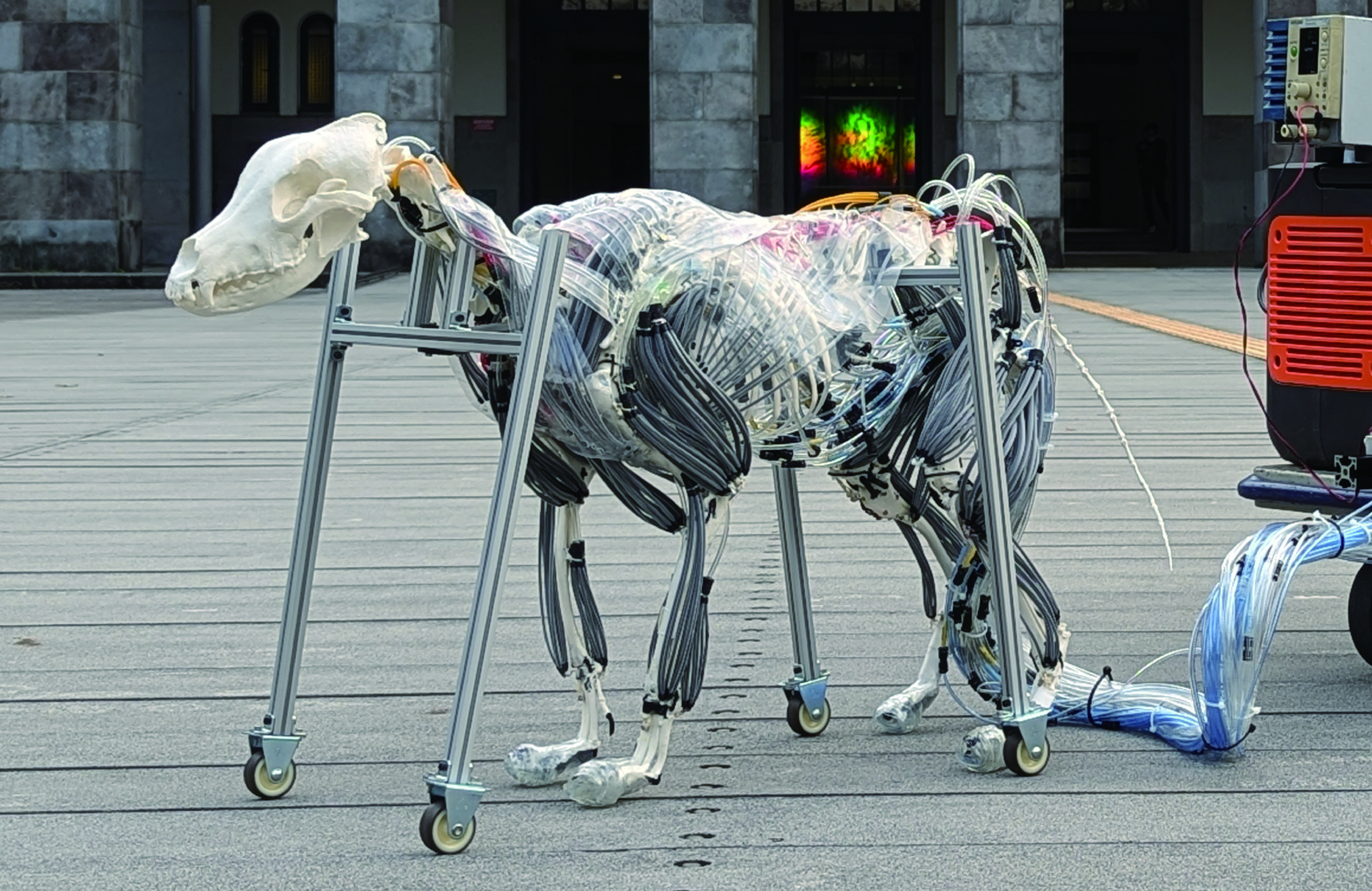
Using thin McKibben artificial muscles that are lightweight, highly compliant, and capable of contracting even when bent, we built a musculoskeletal canine-limb robot and showed that a hammock-like connection structure between the forelimbs and the trunk contributes to improved walking efficiency.
By embedding a resistive stretchable textile sensor inside a McKibben artificial muscle, we can measure displacement without adding any external sensing components to the actuator.
By integrating, in parallel with a McKibben artificial muscle, an add-on component that enables muscle-like passive elongation under external loads when inactive (back-stretching), we can increase the antagonistic actuation range. This is the new method proposed in our 2023 paper.
By fluidically coupling two self-oscillating actuators, each actuator can modulate its oscillation characteristics in response to physical interactions with the surroundings. By embedding this nontrivial physical phenomenon into soft physical machines, they can autonomously adapt to environmental changes and achieve self-steering behavior.
By implementing muscle-like passive elongation under external loads—back-stretching, where the actuator is naturally stretched beyond its rest length when inactive—into a McKibben artificial muscle, we can increase the antagonistic actuation range.